


By sending one part for a turbine to three different processors, a buyer collects three lots of certificates and has to organise three different collection times and three points of failure. This is how I perceived the excellent news in Punchline Gloucester’s report on Poeton’s key European move: the specialist heat treatment facilities that Poeton is going to be moving into, and how I believe the news is even better than the new building itself.
This is the way that buyers will look at this, as one processor in control of the whole process.
Heat treatment is the real headline
Managing director James Poeton said the new Polish site would now be the company’s entry point for specialist heat treatment and also look to serve the growing market of aerospace engine turbines. The furnaces will be critical to the site’s operation and of greater value than the space.
Fewer transfers mean fewer failure points
Adding another processor for transfer between different processors for part processing means extra time for transfer, risk of damage, and additional documentation. The coatings range for the new facility is planned to be introduced in 2027.
Where process steps depend on each other
Often heat treatment precedes coating such as to paint or, alternatively, may follow coating such as to apply an electroless nickel coating and subsequently harden that coating. Thus the process steps are generally tied together in terms of time.
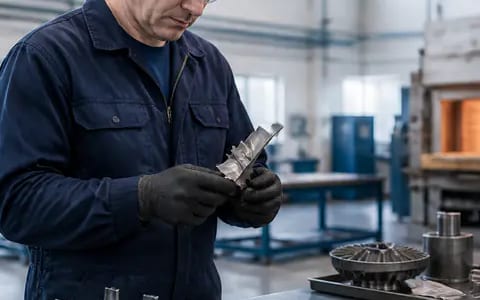
Turbine parts normally have documented evidence of having been controlled by the furnace as well as temperature records. Additionally, parts may require penetrant inspection at various points along the part history. This information would normally be recorded in a single part history in the order that the processes occurred.
What combined routes still ask of buyers
And note, the approval of processes at the new plant gives buyers a clear basis for confirming that furnace control and the plating lines suit their specific part.
Note how Poeton intend to transition to the new building from their current Polish facility over the period 2027-2029. Their existing site remains operational until 2029, so parts can continue to be made during this transition.
Mapping your own part history
Draw out a process map for processing of one part through all stages and identify all handovers and waits. Decide which of these activities would be absorbed by a combined route and what evidence or records would be needed from each individual process – eg. charts from the furnaces, coating batch numbers, penetration test records, etc.
It makes a pretty simple change for buyers with parts processed by three different entities: one collection time, one route and a simple history to read.