


If you are considering purchasing a laser cutter for your workshop then the first thing you need to consider is the materials you will be cutting. Different metals cut more easily than others and some require additional assistance. Here we describe how different materials can be cut with a laser.
Mild Steel Cuts Cleanest
Mild steel is typically the first material that a laser cutter will cut. It can cut material from 0.5mm up to 20mm or more depending on the power of the laser and the materials being cut. The material is typically cut using oxygen as the assist gas. The edges that are produced are clean with minimal dross, usually needing no more than a light secondary process such as grinding or filing to produce a finished edge. This applies to material of 10mm and below.
Stainless Steel Needs Nitrogen
Stainless steel generally cuts well with a laser and can be machined using a variety of assist gases. However, to produce a clean cut edge (i.e. a bright clean cut with no oxide layer to subsequently remove by grinding or pickling) nitrogen is generally the preferred gas to use, often at higher gas pressure than is used for steel cutting and consequently with higher part cost.
Aluminium Is Harder Work
Aluminium is particularly problematic for older style CO2 laser cutters as much of the beam is reflected from the surface and does not penetrate. The material also has a high thermal conductivity which means that it can pull heat away from the cut very rapidly, leading to poor quality cuts with unstable melt pools. Modern fibre lasers however are able to cut reflective metals such as aluminium extremely effectively due to their short wavelength, which is easily absorbed by the material’s surface.
Brass And Copper Need Caution
Brass and copper are by far the most reflective of all the metals and so pose the greatest risk of back-reflection into the laser optics and potentially the cutting head. How these metals cut has become well understood of late and many machine manufacturers detail how to cut different metals of high reflectivity using reduced power and/or the use of protective optics. If you work with a lot of copper busbar or brass components then check your machine’s rated capability before cutting such material, rather than treating it as you would mild steel. See also Cotswold Machinery Laser Machines.
Galvanised Steel Needs Extraction
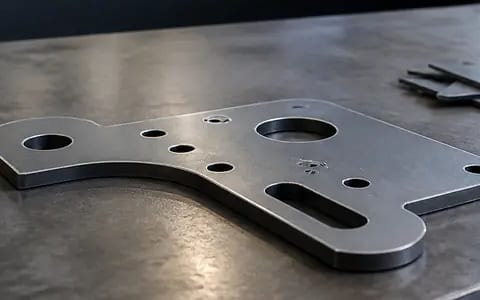
Coated steels (such as galvanised) also cut well in laser terms, but release large amounts of fume as the zinc coating burns off during cutting, and must therefore be extracted. In addition, the coating can cause problems with cut edge quality, giving a rough edge and lots of spatter. This is particularly a problem on thicker gauges (above 3mm) where more cleaning up is required to remove the residual coating from the cut edge.
Typical Thickness Limits
Typical thickness limits of a workshop fibre laser cutter are for mild steel up to 20-25mm, stainless steel up to 15-20mm and for aluminium up to 12-15mm, depending on the power class and the optical settings of the machine. As a rule, working close to the maximum thickness setting usually leads to a slower cutting speed and coarser cut edges. To work efficiently, the laser cutter should be sized slightly above average thickness of the typical parts to be cut.
What Laser Cutting Struggles With
There are number of materials and applications which are not well suited to laser cutting. Glass is notoriously difficult to cut with a laser and often ends up in pieces on the floor. Many reflective or coated plastics such as some of the PVC materials can release large amounts of chlorine gas when cut and so are best avoided altogether. Material thicker than the laser cutter is designed to cut can often be cut very slowly and may even fail to cut at all. Other processes such as plasma or waterjet cutting are often more suitable for these types of work.
Check Certification Before Cutting
Check the material’s certification or “mill certs” against the actual material in front of you before cutting, especially high end stainless and other high end steels. The wrong alloy looks identical to the right one and can cause huge problems when the part fails in service and you can’t prove the material was correct. Keep the certs for each batch of sheet in a file and refer to them if a customer ever asks what was used to make a part.
By knowing what you can cut with a laser cutter and what not to cut with a laser cutter you can save yourself a lot of time and potentially lots of money by not having to replace a damaged optic.